

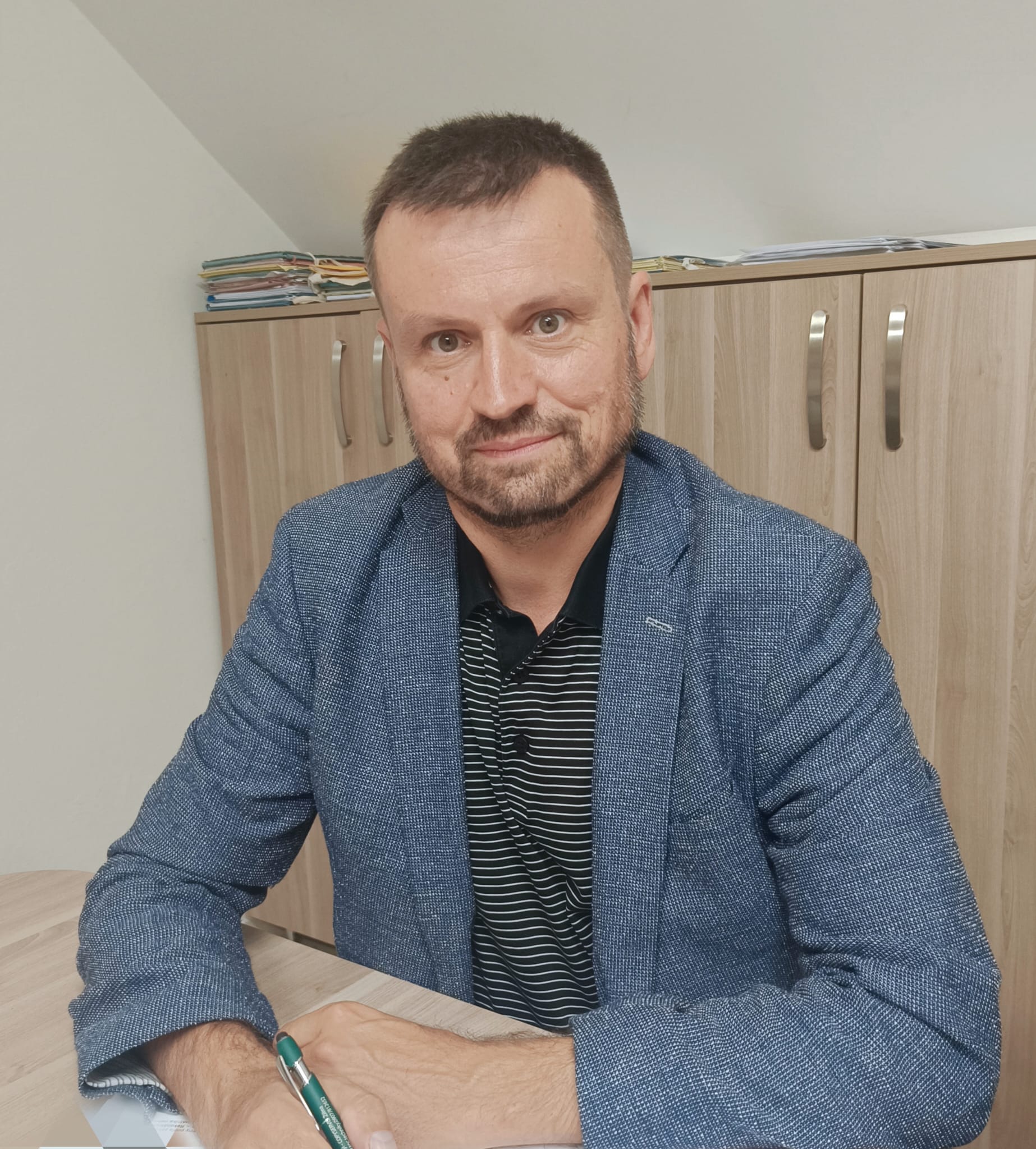
 |
Email:
|
martin.horemuz@upjs.sk |
|
Homepage:
|
https://www.upjs.sk/FF/zamestnanec/martin.horemuz | |
|
Faculty:
|
FF UPJŠ
-
Pavol Jozef Šafárik University in Košice Faculty of Arts
|
|
|
Department:
|
KPo
-
Department of Political Science
|
|
|
Office:
|
P224 | |
|
Phone:
|
+421 55 234 7104 | |
|
ORCID ID:
|
https://orcid.org/0000-0001-8106-5938 |
|
Overview of the responsibility for
the delivery, development and quality assurance of the study programme or its part
at the university in the current academic year
|
|
Study programme: Political Science - the person responsible for teaching the profile subject, study field: Political Science, I. Degree (internal and external form of study) degree
|
|
Study programme: Political Science - the person responsible for teaching the profile subject, study field: Political Science, II. Degree (internal and external form of study) degree
|
|
Study programme: Political Science - the person responsible for teaching the profile subject, study field: Political Science, III. Degree (internal and external form of study) degree
|
|
Profile courses
|
|
KPO/PINST/15 - Political institutions (KPO/PINSTe/15) - Political Science (internal and external form of study), I. degree
|
|
KPO/ZAKPO/10 Introduction to Political Science (KPO/ZAKPOe/11 ) - Political Science (internal and external form of study), I. degree
|
|
KPO/TEPOS/15 -Theories of the Political System (KPO/TEPOSe/14) - Political Science (internal and external form of study), I. degree
|
|
KPO/USMV/25 Introduction to International Relations (KPO/USMVe/25) - Political Science (internal and external form of study), I. degree
|
|
KPO/EIP/21-European Integration Processes (KPO/EIPe/15) - Political Science (internal and external form of study), I. degree
|
|
KPO/DIPPR/25 Diplomatic Protocol (KPO/DIPPRe/25) - Political Science (internal and external form of study), II. degree
|
|
KPO/GEPOL/21 Geopolitics (KPO/GEPOLe/25) - Political Science (internal and external form of study), II. degree
|
|
KPO/IPR/25 Integration Processes (KPO/IPRe/25) - Political Science (internal and external form of study), II. degree
|
|
KPO/TMMP/15 Theoretical and Methodological Issues of International Politics - Political Science (internal and external form of study), III. degree
|
|
KPO/BPS/25 - National Security Policy (KPO/BPSe/25) - Political Science (internal and external form of study), I. degree
|
|
Selected publications
|
|
1046727: The regional importance of the EU in the context of international relations / Horemuž, Martin [Autor, ZUZFHVKFI, 100%] ; Heroutová, Eva [Recenzent] ; Šrédl, Karel [Recenzent]. – [angličtina]. – [OV 060]. – [ŠO 6718]. – [príspevok] In: Evropa v pohybu - legitimita, legalita a realita [textový dokument (print)] / [bez zostavovateľa] [Zostavovateľ, editor]. – 1. vyd. – České Budějovice (Česko) : Vysoká škola evropských a regionálních studií, 2023. – (Studia). – ISBN 978-80-7556-118-3, s. 46-60 [tlačená forma] |
|
1023671: Some issues of the current security policy of the Russian Federation / Horemuž, Martin [Autor, ZUZFHVKFR, 100%] ; Security Forum 2022, 15 [09.02.2022, Banská Bystrica, Slovensko]. – [angličtina]. – [OV 070]. – [ŠO 6718, 6835]. – [príspevok z podujatia]. – [recenzované] In: Security forum 2022 [elektronický dokument] : 15th annual international scientific conference February 9th, 2022 at Matej Bel University in Banská Bystrica, Slovakia / Ušiak, Jaroslav [Zostavovateľ, editor] ; |
|
1548929 Švec, Jakub [Autor, 40%]; Horemuž, Martin [Autor, 40%]; Brisudová, Katarína [Autor, 20%]: Selected aspects of ideologgy in the context of contemporary humanities and social sciences. Česke Budějovice Vysoká škola evropských a regionálních studií, 2025, 119 s. ISBN 978-80-7556-172-5. |
|
1296655: Book Review: To the Philosophical Reinterpretation of Early Liberalism / Horemuž, Martin [Autor, 100%]. – DOI 10.24040/politickevedy.2024.27.3.172-182. – WOS CC In: Politické vedy [textový dokument (print)] [elektronický dokument] : časopis pre politológiu, najnovšie dejiny, medzinárodné vzťahy, bezpečnostné štúdiá. – Banská Bystrica (Slovensko) : Univerzita Mateja Bela v Banskej Bystrici. Fakulta politických vied a medzinárodných vzťahov. – ISSN 1335-2741. – ISSN (online) 1338-5623. – Roč. 27, č. 3 (2024), s. 172-182 [tlačená forma] [online] |
|
1147165: On political liberalism of John Rawls: perspectives and problems in contemporary civil-political discourse / Horemuž, Martin [Autor, ZUZFHVKFI, 50%] ; Švec, Jakub [Autor, ZUZFHVKFI, 50%]. – [slovenčina]. – [OV 020]. – [ŠO 6107]. – [article]. – [recenzované]. – DOI 10.24040/politickevedy.2023.26.3.123-140. – ESCI ; WOS CC |
|
Selected projects
|
|
587609-EPP-1-2017-1-SK-EPPJMO-MODULE Jean Monnet Project name: The Ukrainian Crisis: Challenge for European integration Project implementation period: 09/17-08/20 Position in the project: co-investigator of the project Brief description of the Project: The project was launched with the aim of developing and improving the teaching of European integration studies at the Catholic University in Ružomberok. The project was designed to deal with European integration through the implementation of a series of courses aimed at describing and analyzing the specific challenges for the European Union arising from the Ukrainian crisis. The teaching module was to consist of three new courses. The aim of the courses was to provide a contemporary view of the European project through the specific challenges that the EU is facing. All courses were to be carefully designed with academic reading to make the courses more relevant, attractive and meaningful to new students of European Affairs. The courses were to include an interdisciplinary approach with a special focus on the perspectives of international relations, sociology and political theory. in addition to the specialized courses module, UCCHEI was to include several other activities. Through these activities, the project targeted a group of high school students as well as the general public. Lectures at secondary schools were also part of the project. The main goal of this activity was lectures for high school students on the topic of European integration. In addition to providing a general overview of the issue, the aim of this activity was to support the idea of European integration and the importance of responsible citizenship among secondary school students in Slovakia. Another activity was an essay writing competition. The goal of the essay writing competition was to promote interest in the ideas and values of the European Union and to raise awareness of the importance of active European citizenship and European identity. The competition was supposed to help develop critical thinking and the ability of young people to formulate their own opinions and arguments. Round table debates were also held. The aim of the roundtable debates was to organize public events where various stakeholders, team members and invited guests would meet to focus strongly on and discuss specific project topics. The project also produced promotional videos. The aim of this activity was to create a series of promotional videos that would clearly and concisely explain the challenges of the Ukrainian crisis and the role of the EU. These videos should be a useful didactic material and teaching aid for students of various fields. Individual research initiatives were also an integral part of the project. The first research initiative was to focus primarily on Europeanization as a concept and Europeanization of foreign and domestic policy as an important factor in explaining changes in Ukraine's energy policy. The second research initiative was aimed at understanding the political participation of young people and providing insights into their social and political engagement. |
|
Project Title: Self-defense mechanisms of democracy: The concept of militant democracy in conditions of the Slovak Republic Project Number: APVV-24-0174 Project implementation period: 2026–2029 Position in the Project: Co-Principal Investigator Brief Project Description: The concept of militant democracy is not sufficiently present in social and behavioural sciences in Slovakia, although it is related to previous paradigms of the crisis of representative democracy, post-modernism and post-democracy. The aim of the interdisciplinary team of project is primarily: (1) to identify the historical and ideological sources of the scientific paradigm of militant democracy itself and to describe its developmental stages, (2) to analyse the causes and to determine the forms, instruments, institutions and processes of the defence of democracy in the conditions of selected political systems and especially in the conditions of the SR. The project is based on the theoretical assumption that ideological constructs similar to militant democracy emerge in periods of increased threat of authoritarian and totalitarian regimes coming to power, while the essence and purpose of the defence of democracy is above all to protect democratic constitutionalism. This defence is comprehensive in nature, not just political and legal measures. Despite its various forms in different historical phases, the concept of militant democracy has never lost its essence. Empirically, the fight against the enemies of democracy in the SR most often focuses on actors who are the bearers of radical and extremist attitudes and values. Methodologically, the research is based on Karl Loewenstein's (1937) and Carl Schmitt's (1922) concept of militant democracy and is based on predefined heuristic categories. The research team will use a combination of semi-structured interviews with experts in relevant fields, while following a chronological-logical approach, emphasizing the historical method, the method of analysis of documents and existing facts, the comparative method, and case studies. Particular attention will be paid to the synergy between the European/global context of the research of the given issue and the internal political developments in specific Slovak conditions |
|
Project Title: Internationalisation, Innovation and Modernisation of a Modular Education in Political Science Project Number: 014UPJŠ-4/2025 (KEGA) Project implementation period: 2025–2027 Position in the Project: Co-Principal Investigator The main aim of the project is to internationalize and innovate education in political science at the Faculty of Arts of the University of Pavol Jozef Šafárik in Košice in order to adapt to current trends in educational approaches. The aim is to reform the teaching in the study programme of political science and its specialised modules of international relations and political theory in the process of internationalisation of teaching. The Department of Political Science is one of the departments actively participating in platforms such as Erasmus+, FreeMover or the National Scholarship Programme, thanks to which it regularly hosts foreign students and offers them teaching in English. An essential condition in the process of improving the quality of teaching of foreign students is the possibility to provide them with quality study materials in English, which would reflect the selected areas of expertise, but at the same time would be able to effectively connect the theoretical matter with the specific Slovak or Central European context, thanks to which foreign students would gain a more comprehensive view of the subject area of study. The aim of the project is to support the internationalisation of teaching through the publication of three electronic university textbooks in English, which will serve as study material for incoming foreign students. At the same time, the project aims to modernise the teaching process using e-learning tools by preparing new specialised courses in English for foreign students. The experience of the project's researchers in teaching foreign students and international cooperation, as well as in solving various other projects within APVV, VEGA or KEGA, are the guarantee of the fulfilment of the objectives |
|
Project Title: Metaethics of Contractual Theories of Liberalism Project Number: 014UPJŠ-4/2025 (KEGA) Project implementation period: 2025–2027 Position in the Project: Deputy Project Leader The project focuses on identifying utilitarianism as the metaethical foundation of the social theory of liberalism. The aim is to demonstrate that liberalism, which is defined both philosophically and politically through individualism, human rights, market mechanisms, and the rule of law, implicitly draws on utilitarian ethics. At the same time, the project challenges the validity of the traditional distinction between rule utilitarianism and consequentialism, since neither is capable of reflecting the motivation behind moral action. The relationship between the understanding of individual well-being and the concept of social justice in liberalism is also analyzed. The analysis draws on the works of classical liberal thinkers and contemporary authors (John Rawls, Bernard Williams, Ronald Dworkin, Peter Singer). The project also examines the implications of a utilitarian approach to rationality in fields such as education, healthcare, and law, and highlights the dominance of preference utilitarianism as the foundational framework of liberal thought. |
|
International mobilities and visits
|
|
University of Ljubljana, Kongresni trg 12, 1000 Ljubljana, Slovinsko, August 28, 2015 – September 6, 2015, Fund for the Support of Science, Research Fellowship
|
|
University of Reims Champagne-Ardenne, 2 Av. Robert Schuman, 51100 Reims, Francie, August 31, 2014 – September 10, 2014, Fund for the Support of Science, Research Fellowship
|
|
Katholieke universiteit Leuven, Oude Markt 13, 3000 Leuven, Belgium, 2012-2015, (March 10, 2013 – March 25, 2013, August 22, 2013 – September 6, 2013,
April 23, 2014 – May 7, 2014, January 21, 2015 – February 7, 2015), PostDoc II, Research Fellowship
|
|
J. E. Purkyně University in Ústí nad Labem, Pasteurova 3544/1, 400 96 Ústí nad Labem, Czech Republic, October 20, 2025–October 24, 2025, ERASMUS+
|
|
Projects
|
|
„The Ukrainian Crisis: Challenge for European integration“, (587609-EPP-1-2017-1-SK-EPPJMO-MODULE Jean Monnet) VEGA no. 1/0830/15 - Issues of faculty narrative
|
|
Other
|
|
FIELD SPECIFIC POST-DOCTORAL RESEARCH PROJECTS – II. (POST-DOC II. 2012-2015), Perspectives and Possibilities of Economic Integration of the Post-Soviet Space. Catholic University of Leuven, Belgium
|
